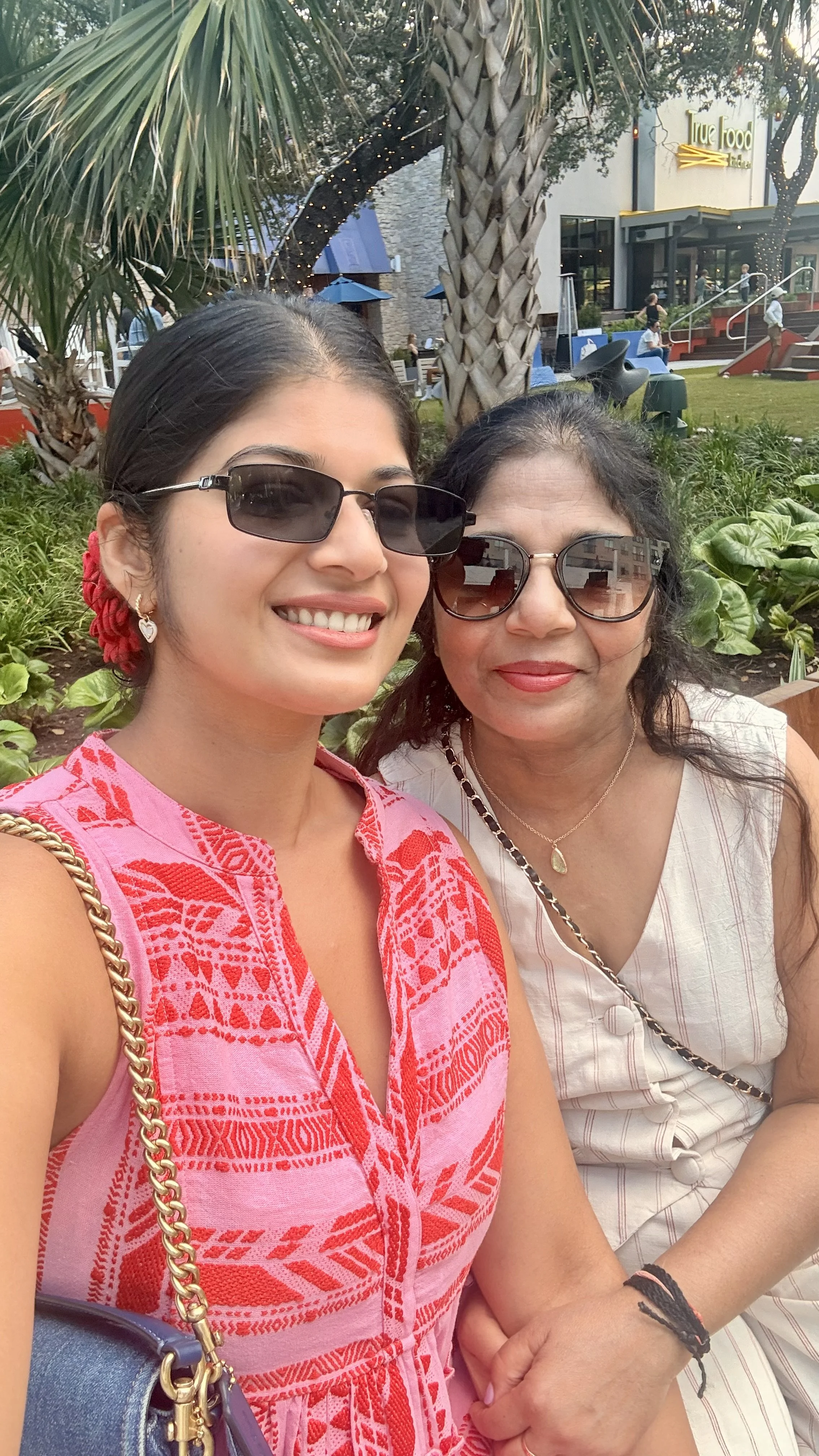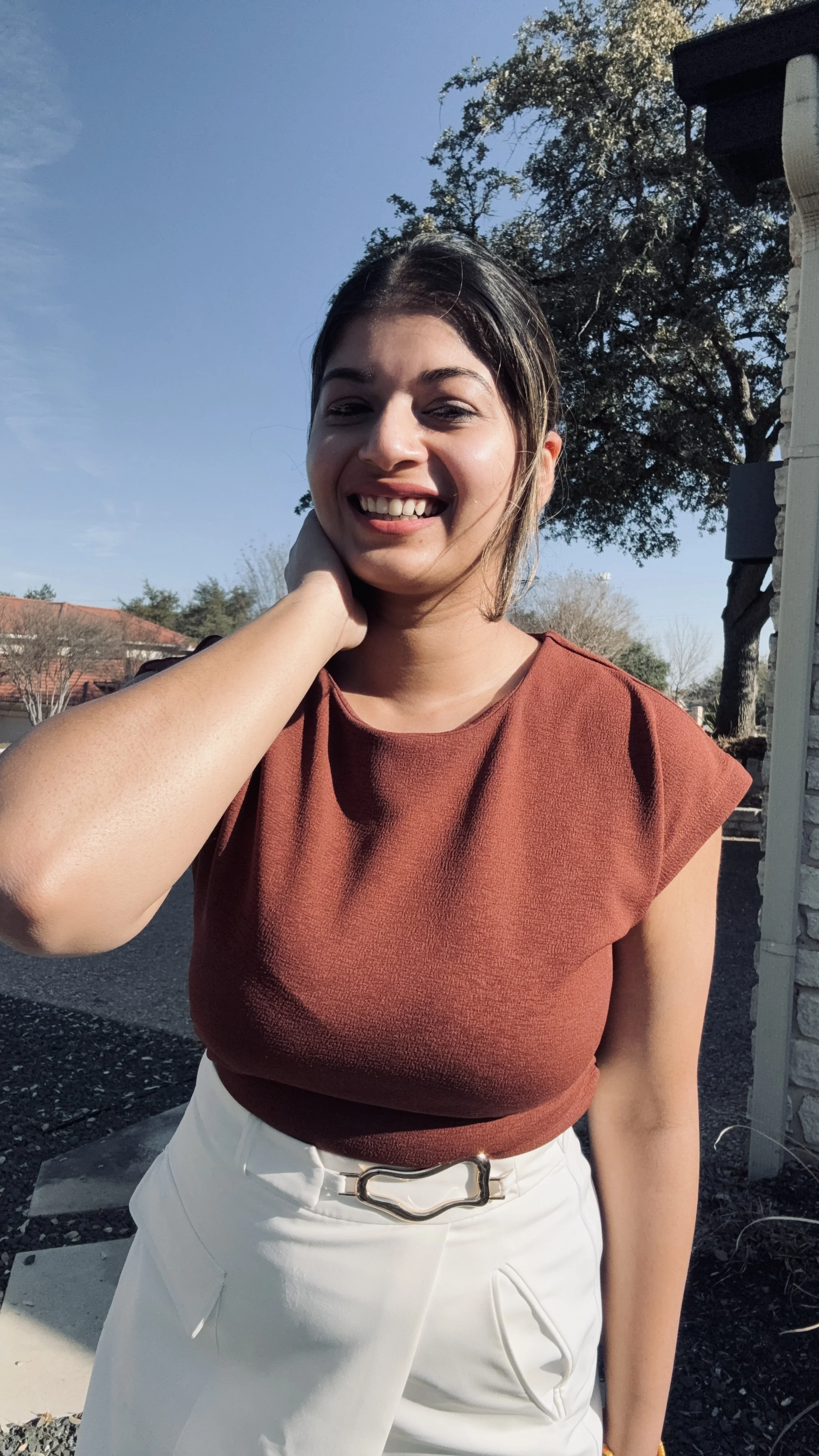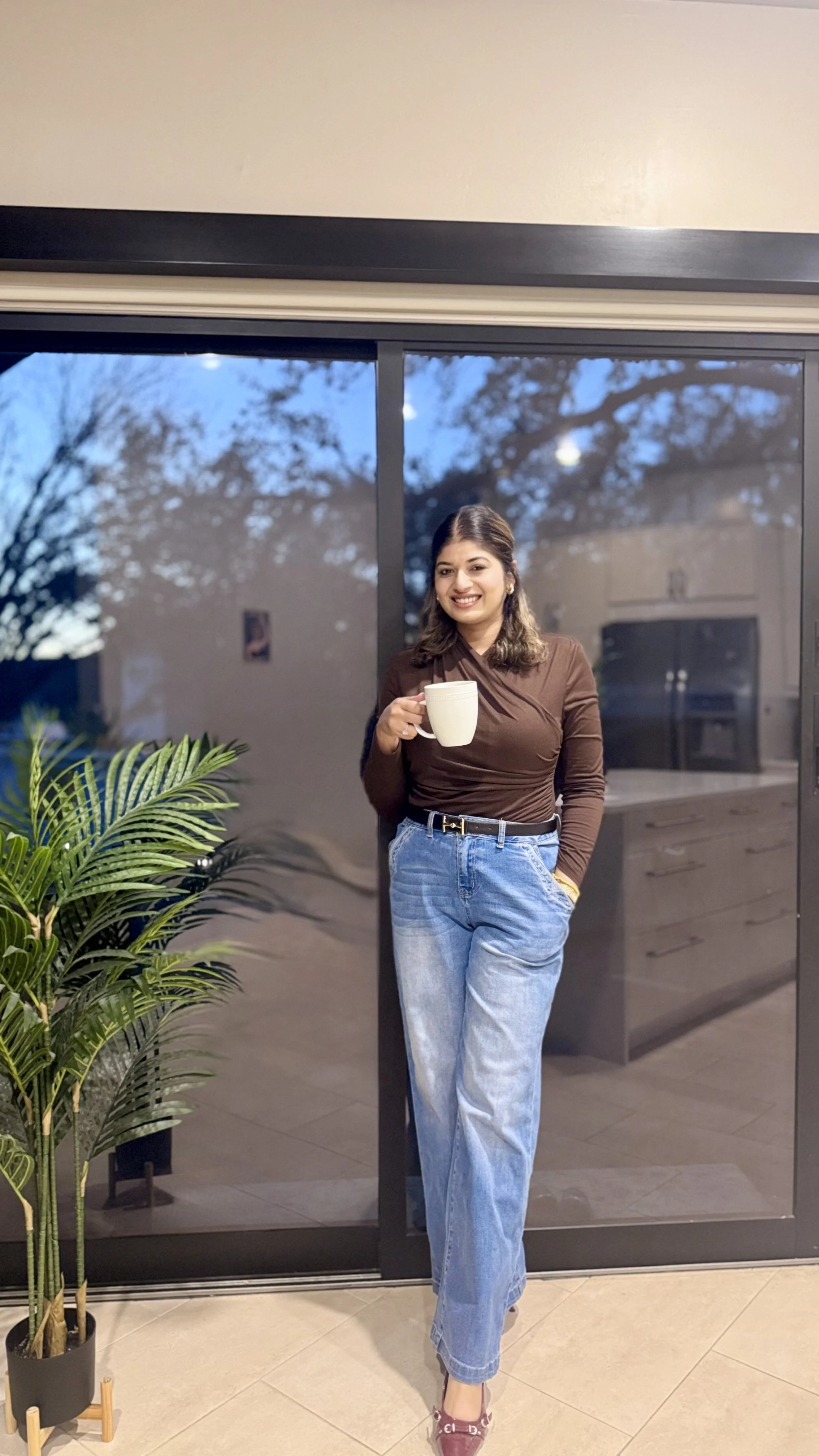
Who are we?
Me and my team of passionate thinkers and doers, dedicated to building with purpose and clarity. Collaboration and curiosity drive everything we do.
Hi, I'm Jinee.
I've been preparing for this work my entire life.
From growing up surrounded by women facing silent health battles, to tech leadership burnout, to discovering the power of nervous system regulation—everything led here. Now I help women in tech and business optimize their biology the way they optimize their systems at work.
I grew up connected to nature and it shaped everything.
Long before I knew words like "circadian biology" or "nervous system regulation," I was living them. I grew up in India watching clear blue skies, waking to birdsong, keeping plants in every corner of our home. Walking wasn't something I scheduled—it was just part of life. Zumba and dance became my joy as a teenager, not because someone told me to exercise, but because movement felt good.
I didn't realize it then, but I was learning what it means to live in rhythm with your body. To honor daylight and darkness. To move for pleasure, not punishment. To be surrounded by living things that grow when you tend to them properly.
This is why my approach feels different from rigid protocols and clinical interventions. I believe your body already knows what it needs—we just have to remove the noise and reconnect you to those natural rhythms.
I was raised by women. Surrounded by them. Watching them closely.
My mother had seven sisters. My father had three. Growing up, I was constantly in the presence of women—their conversations, their struggles, their quiet resilience. I watched them navigate marriages, careers, motherhood, health crises. I saw things most people don't talk about.
One of my aunts couldn't have children. I watched that longing turn into a kind of anger that colored everything in her life. Another aunt struggled with severe hyperpigmentation—the kind that no cream or treatment seemed to touch. My own mother battled dark circles and hyperpigmentation around her eyes for years, fighting it with everything she could find.
I saw patterns emerge. I saw how stress lived in their bodies. How hormonal chaos showed up on their skin, in their moods, in their ability to conceive. How some issues seemed to skip a generation, then reappear. How the ones who stayed physically active and mentally resilient recovered faster from everything—surgery, heartbreak, illness.
This is why I don't just look at your current symptoms. I look at generational patterns, at what you might be inheriting, at what we can interrupt now so you don't pass it forward. I'm helping women in this generation break cycles that have been running in families for decades.
Then came the moment that changed everything.
When I was sixteen, just after my tenth-grade board exams, my mother had a sudden paralysis attack. One day she was fine—picking me up from the bus stop like always. The next day, she wasn't there.
I came home to find my father silent, tense. We drove straight to the hospital. What I saw there is burned into my memory: my mother fighting between life and death. Her left side wasn't responding. Her tongue couldn't form words properly. Her voice sounded wrong. Her nervous system had shut down.
At sixteen, watching your mother unable to speak to you—that changes you forever. I was terrified I'd never get her back.
But then I watched something remarkable happen.
We found a neurosurgeon who didn't just treat the physical damage—he understood the brain's capacity to rewire itself. He talked about neuroplasticity before it was trendy. He explained how the mind and body work together in recovery. How belief, routine, and nervous system support could rebuild pathways that seemed permanently broken.
The recovery took two to three years. It wasn't linear. There were setbacks. But my father became the anchor—calm, organized, unwavering. While everyone else panicked, he created structure. He made sure she had the right nutrition, the right rest, the right support at the right times. I watched him manage his own stress so he could hold space for hers.
My mother already had a strong foundation. She'd always been active—Zumba was her passion, dancing was her joy. She ate protein-balanced meals: soybean, tofu, legumes, fruits, oats. Her body had muscle memory of health. But it was the combination of physical rehabilitation, mental rewiring, and nervous system regulation that brought her back.
This is why nervous system regulation is the foundation of everything I do now. I watched my mother's nervous system shut down at sixteen—and I watched it rebuild over years. I learned about neuro research, about mind rewiring, about the power of calm support during crisis. When I work with women whose bodies feel stuck in fight-or-flight, I'm not guessing. I lived it.
Meanwhile, I was struggling in my own way.
Losing my mother's presence while she recovered left a gap I didn't know how to fill. My focus at school dropped. I failed exams I should have passed. I gained significant weight—not because I didn't know better, but because food became the one thing that felt comforting when everything else felt out of control.
Processed food became my coping mechanism. The dopamine hit. The temporary relief. I understand now what I didn't then: my nervous system was overwhelmed, and eating was the one thing I could control.
This is the version of me I think about when I work with women who are using food to cope with stress. Not because they lack discipline. Not because they don't know what's healthy. But because their nervous system is dysregulated and food is the one reliable source of comfort. I know what that feels like from the inside.
Moving to the U.S. forced me to rebuild.
When I came to the United States for my master's degree, I knew I couldn't let everything I'd learned from my mother disappear. I started slowly—working part-time to afford a gym membership, rebuilding discipline one workout at a time. I learned about metabolic nutrition, strength training, ketogenic approaches.
I lost over thirty pounds. But more importantly, I learned how to maintain health without extremes. How to work with my body's signals instead of overriding them. How to eat in a way that supported my hormones, not just my weight.
If you've tried keto, Whole30, intermittent fasting and felt amazing at first—then crashed—I've been there. I spent years learning how to use metabolic strategies without wrecking hormones or relationships with food. That's what I help women do now: find what works for YOUR body and YOUR life.
Then tech leadership tested everything I'd learned.
As my career grew—DevOps engineer, team lead, the person everyone called at 2am when production broke—I hit a new kind of challenge. The commute alone was burning 20,000 steps a day. Long hours, constant pressure, travel, mental load. I was doing everything "right" nutritionally, but my body wasn't responding the way it used to.
Exhausted by 3pm. Wired at night. Running on caffeine and adrenaline. Brain fog in meetings. Creeping weight gain despite "clean eating." Sound familiar?
When women tell me they're tired but can't sleep, that they're doing everything right but nothing's working, that they're the person everyone depends on while their own system is falling apart—I don't need you to explain. I lived it. That's HPA axis dysregulation. That's chronic sympathetic dominance. And I know exactly how to work with it.
So I went looking for real answers.
I became obsessed with understanding why. Why did protocols work, then stop working? Why was I always tired but couldn't sleep? Why did my hormones feel chaotic despite doing "all the right things"?
I immersed myself in functional health training—studying functional diagnostic nutrition, clinical nutrition protocols, wellness coaching methodologies. I ran labs on myself. I experimented. I learned to read my body's language instead of just following influencers on Instagram.
Everything I'd learned from watching my mother's recovery, from growing up surrounded by women's health struggles, from understanding neuro research and nervous system regulation—it all came together.
That's why I created the BioAligned Method.
It's not another diet. It's not a 30-day challenge. It's a framework built on everything I've learned—from my mother's neurosurgeon's approach to brain rewiring, from watching generational health patterns play out, from my own metabolic experiments, from leading teams in high-stress tech environments.
If you're experiencing:
Nervous system dysregulation (wired but tired, can't shut your brain off)
Metabolic slowdown (nothing works like it used to, stubborn weight gain)
Hormonal chaos (irregular cycles, PMS, skin issues, thyroid dysfunction)
Complicated relationship with food (restriction, binging, emotional eating)
The gap between how you look on the outside and how you feel on the inside
Generational patterns you don't want to pass to the next generation
If you're ready to stop white-knuckling through your days and start working with your biology instead of against it—I've been exactly where you are. I watched my mother's nervous system shut down and rebuild. I observed women in my family struggle with issues that could have been addressed. I lived through tech burnout myself. And I know the way through.
What I bring to this work that no one else does.
I'm not here because health is trendy. I'm here because I grew up watching women suffer in silence. Because I learned about nervous system regulation and neuroplasticity before I was seventeen. Because I understand generational health patterns from lived observation, not textbooks.
I know what it's like to be the only woman in the room in tech. I know what it's like to carry invisible labor while your body keeps score. I know what it's like to have every wellness expert tell you to "just relax" when your nervous system doesn't remember how.
And I know—from watching my mother's recovery, from my own transformation, from helping women navigate these exact struggles—that your body is brilliantly designed. When you understand its language, when you work with its natural rhythms instead of against them, when you address the root causes instead of just managing symptoms—everything changes.
I'm currently completing advanced certifications in functional diagnostic nutrition and clinical wellness coaching to formalize decades of study and lived experience. But the foundation of my work isn't just education—it's a lifetime of observation, personal transformation, and deep understanding of how women's bodies actually work.
My Approach
"I believe your body is brilliantly designed—and that we can understand its language through data, observation, and time-tested wisdom."
Health optimization should feel like finally coming home to yourself—not like another performance metric you're failing at.
I combine biomarker analysis with nature-aligned living, nervous system science with generational pattern awareness, metabolic optimization with practical sustainability. Because true health isn't about choosing between science and intuition, between tradition and innovation—it's about honoring all of it.
I don't believe in perfection. I believe in progress. I don't believe in restriction. I believe in alignment. And I don't believe you're broken—I believe your body is doing exactly what it was designed to do under the conditions it's been given. My job is to help you change those conditions.
And unlike protocols built in isolation, my approach is informed by watching real women—my mother, my aunts, my clients—navigate real life. I know what works in theory. More importantly, I know what works in practice.